LTA Sidecar liquid cooling in existing data centers
液对空散热技术如何运作?
nVent 液对空 (LTA) CDU 专为无需冷却水的人工智能部署场景而设计。作为液对空 CDU,这种完全集成的散热系统可在没有设施水系统 (FWS) 的情况下,通过液冷方式对多达两个机架的 IT 设备进行散热。对于加速计算,nVent 的 LTA CDU 在液冷平台中发挥着关键作用,液体在封闭回路中循环流过机架,带走芯片产生的热量。
特点和优点:
- 热插拔与可维护性 — 泵、风扇、电源、控制器和过滤器均支持热插拔,可从设备前部进行维护,无需中断冷却。
- 最大限度减少故障与泄漏 — 集成式泄漏检测、无泄漏软管连接以及冗余组件,可降低停机风险。
- 控制器特点 — 配备 LED 光路状态面板的热插拔控制器,可提供监控功能并一目了然地显示系统状态。
什么是液对空 CDU?
冷却剂分配装置 (CDU) 对液体进行调节并循环输送至其所服务的机架,随后必须将捕获的热量排放至某处。这一热量排放的去向正是区分两种主要 CDU 类型的关键。液对液 (LTL) CDU 将热量传放至建筑物的设施水系统,具有大容量与高效率的优势,但依赖冷水基础设施。液对空 CDU 则直接将热量排放至机房空气中,因此完全无需连接设施水系统。
正是这一差异,使液对空 CDU 成为现有风冷数据中心切实可行的选择。当设施没有冷水回路,或改造冷水回路不可行时,LTA CDU 可在现有空间内实现直达芯片的液冷。设备内部的风扇将捕获的热量送入机房空气流,由数据中心现有的空气处理机将其带走。
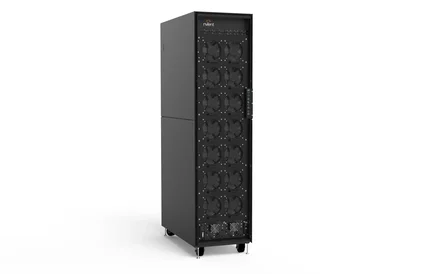
nVent 液对空 (LTA) Sidecar 即是 nVent 的液对空 CDU。它使运营方能够立即部署当下液冷式 AI 与 HPC 机架,并在无需全面改造设施的前提下,作为向更广泛液冷应用过渡的桥梁。
液对空 CDU 规格
nVent 液对空 (LTA) 是一个完全集成的液对空散热系统,可在没有设施水系统 (FWS) 的情况下,通过液冷方式对多达两个机架的 IT 设备进行散热。LTA CDU 采用 48U 机架,其占地面积为 600mm(24 英寸)宽 × 1200mm(48 英寸)深。
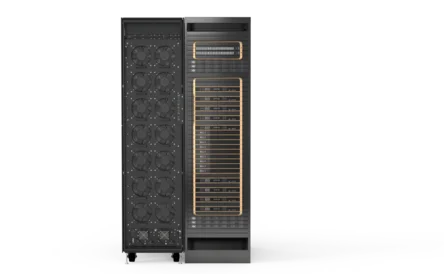
LTA CDU 配备 14 个 N+1 配置的热插拔风扇、一个带 N+N 热插拔泵的储液罐泵装置 (RPU)、一个热插拔控制器、一个热插拔并行可维护的冗余过滤系统、6 组 N+N 冗余电源、集成泄漏检测、无泄漏软管连接,以及一个 LED 光路状态面板。风扇、泵、电源以及用于系统注液和排液的液体连接等有源组件位于 LTA CDU 的前端,便于检修。
支持 GB200 NVL36 和 GB200 NVL72 机架配置,其中 GB200 NVL36 机架由一个 LTA CDU 支持 (1:1),GB200 NVL72 机架则由两个 LTA CDU 并行支持 (2:1)


LTA Sidecar 以液体和空气 2:1 的配置支持 GB 200 NVL72
液对空 CDU 应用和兼容性
LTA CDU 以最小的基础设施改动,将液冷式 AI 硬件引入现有数据中心。nVent 提供面向 NVIDIA GB200 NVL36 与 NVL72 机架的参考配置,使运营方能够在无需围绕这些芯片重建设施的情况下,部署当今的高密度 AI 芯片。
为何部署无需设施水系统的液冷方案?
部署不依赖设施水的液对空 CDU 具有诸多显著优势,比如可避免设施水基础设施带来的复杂挑战,还能降低运营成本。这种方案使数据中心能够在保持高性能与高可靠性的同时,增添液冷能力。

LTA sidecar 按液体和空气 1:1 的配置支持 GB200 NVL36

LTA CDU 是否可扩展?
液对空 CDU 为数据中心提供可扩展的液冷解决方案。它采用模块化设计,能够随着散热需求的增长而轻松实现扩展。对于那些期望在无需进行大规模翻新改造的前提下,增强散热能力的数据中心而言,液对空 CDU 无疑是一种灵活且理想的选择。
功能
- 在风冷环境中对 IT 设备进行液体冷却
- 本地化的封闭液冷回路,无需依赖任何设施液体基础设施
- 支持各种环境条件
- 标准 48U IT 机架外形
- 性能经过优化,可实现低 CFM/kW 散热性能
- 支持高达 30% 的处理水或乙二醇混合液
- 不锈钢管道
热插拔和可维修性
- 免工具的热插拔冗余泵、风扇电源、温度和压力传感器
- 免工具的热插拔系统控制器
- 热插拔冗余过滤器
- 25 微米或 50 微米过滤选项
- 柔性软管连接,便于灵活安装
- 与 IT 设备相连的顶部和底部冷却液接口
- 可清洁、可重复使用的过滤器,降低运营成本
- 所有热插拔组件均可维修,无需中断散热
- 泵、风扇、电源以及注液和排液接口均位于设备前部,便于维修和检修


为什么选择 nVent 的液冷系统?
nVent 深耕液冷工程超过 15 年,面向最严苛的计算环境,已在现场部署 2GW 液冷容量。这一经验体现在为全球制造与支持所打造的产品之中 — 这些产品为可靠性、可维护性,以及 AI 与高性能计算当下所需的热负载而构建。
nVent 和 NVIDIA 携手推进高性能计算
nVent 与 NVIDIA 携手合作,开发技术方案,攻克最具挑战性的高密度计算冷却难题。nVent 将深厚的液冷应用经验与全球工程及制造能力相结合,助力为先进计算环境提供高效、可靠的冷却。
Can I liquid cool NVIDIA GB200 NVL72?
Yes. In fact, liquid cooling the NVIDIA GB200 NVL72 is a mandatory architectural requirement to manage its 120kW thermal load. For data centers without facility water loops, this is achieved via a 2:1 configuration utilizing two nVent LTA CDU flanking a single NVL72 rack. Because the platform demands a massive 80 liters per minute fluid flow rate, dividing the load between two row-based, closed-loop LTA CDU units ensures safe junction temperatures. This specialized setup isolates the liquid loop and rejects the heat directly into the existing air-cooled CRAC infrastructure without facility plumbing modifications.
When should operators choose liquid-to-air cooling over air cooling?
Data center operators must shift to a Liquid-to-Air (LTA) cooling architecture when expanding to high-density computational nodes - such as artificial intelligence or accelerated high-performance computing (HPC) clusters - where server rack thermal envelopes exceed 20kW to 30kW per enclosure. Traditional air-handling units lack the heat transfer efficiency to manage these loads, resulting in thermal throttling. The LTA CDU resolves this challenge by establishing an immediate, localized closed-loop direct-to-chip heat extraction path, taking the heat straight out of the fluid loop and transferring it into the room's air distribution grid without overloading the air-cooling floor footprint.
Can nVent liquid cooling integrate into existing air-cooled server racks?
Yes. nVent liquid cooling systems are engineered specifically to integrate seamlessly into existing air-cooled server racks without disrupting current operations. The LTA CDU functions as a row-based retrofit, attaching directly alongside standard cabinets. It provides an immediate transition to direct-to-chip cooling by utilizing specialized row-level manifolds and cold plates. This allows legacy infrastructure to adopt high-density compute infrastructure without the need to tear out existing enclosures or redesign the room's overall structural airflow layout.
How does an LTA CDU system interface with secondary cooling loops?
The integrated Coolant Distribution Unit (CDU) within the LTA CDU acts as the critical barrier and management hub interfacing with secondary cooling loops. The system isolates the secondary loop - which flows directly across the server cold plates - from the primary heat exchanger. By regulating fluid dynamics, monitoring precise flow rates, and controlling pressure thresholds within the secondary loop, the CDU ensures that clean, debris-free dielectric fluid or water-glycol chemistry is consistently delivered to the delicate silicon-level cold plates.
Can I deploy direct-to-chip liquid cooling without a facility water system?
Absolutely. You can seamlessly deploy direct-to-chip liquid cooling without an existing facility water system by leveraging the liquid-to-air design. In this deployment, the fluid loop absorbs heat directly from the server components via high-efficiency cold plates and pumps it straight to the adjacent LTA CDU. High-performance, variable-speed fans inside the CDU then reject that heat directly into the data center's air stream, completely bypassing the requirement for centralized chilled water loops or facility-level plumbing expansions.
What redundancy and serviceability features are built into the LTA CDU?
The LTA CDU is built with comprehensive hardware redundancy and hot-swappable components to guarantee continuous uptime for mission-critical workloads. It features dual, redundant pumps operating in an N+1 or 2N configuration, ensuring the cooling loop remains active even during a mechanical failure. Additionally, its modular design allows data center technicians to replace critical components - such as fans, control modules, and filtration elements - directly from the aisle floor without shutting down the server rack or breaking the secondary fluid loop.
How does liquid-to-air cooling align with data center ESG and sustainability?
The LTA CDU directly supports Environmental, Social, and Governance (ESG) targets by optimizing a data center’s Water Usage Effectiveness (WUE) to a net-zero metric. Unlike traditional cooling tower infrastructures that evaporate millions of gallons of water daily, the LTA CDU runs on an air-cooled, fully sealed closed-loop cycle that demands zero operational water consumption. Furthermore, by using cleanable, high-efficiency air filters that lower physical waste and utilizing durable stainless steel plumbing components to mitigate rust and chemical waste, it significantly reduces ongoing maintenance overhead and overall environmental impact.