Air Cooling Solutions
Air cooling remains the foundation of thermal management in countless electronic systems. It is familiar, economical, and effective across a wide range of applications—from industrial enclosures to embedded electronics and control systems.
But as electronic systems evolve, air cooling can no longer be treated as a simple, secondary design choice. When airflow is not engineered with precision, air‑cooled systems are especially vulnerable to thermal drift— the gradual shift in component temperatures and operating margins that leads to performance degradation, reduced efficiency, and shorter system lifespan over time.
Air cooling still works—but only when it is engineered with precision.
Air Cooling Has Changed—Even If the Principle Hasn’t
For example, in compact industrial enclosures, insufficient airflow separation can allow exhaust air to recirculate back into intake paths. This can raise local component temperatures by several degrees without being immediately detected at system level—gradually reducing thermal margins. The basic principle of air cooling is straightforward: move heat away from components using airflow. Yet today’s systems operate under conditions that didn’t exist when many traditional air‑cooling concepts were developed.
Higher power densities generate localized hotspots rather than uniform heat loads. Space constraints limit airflow paths. Enclosures must meet protection standards while still allowing efficient air movement. Systems operate across wider temperature ranges and in less predictable environments. Under these conditions, airflow that looks sufficient on paper can behave very differently in reality. Heat bypasses critical areas. Warm air recirculates. Temperature gradients form inside the enclosure—and over time, thermal drift sets in. This is why many air‑cooled systems only reveal problems late in testing or climate chamber validation, when margins disappear and changes become costly.
Thermal Drift in Air‑Cooled Systems Is Often an Airflow Problem
Even small, sustained temperature increases—on the order of 5–10°C at the component level—can significantly reduce semiconductor lifespan and accelerate material degradation. When air cooling fails, it is rarely because air itself is insufficient as a cooling medium. More often, it is because the airflow is uncontrolled. Uneven distribution, blocked intakes, poorly defined hot and cold zones, or air leakage inside enclosures allow temperatures to rise gradually at the component level. These small deviations rarely cause immediate failure, but they destabilize the system over time—reducing efficiency, shortening component lifespan, and increasing maintenance needs. In regulated or mission‑critical environments, these deviations can also complicate compliance and operational confidence.
Preventing thermal drift in air-cooled systems depends less on airflow volume and more on airflow control—ensuring that cooling capacity reaches the components that actually require it.
Modern Air Cooling Is About Control, Not Just Movement
Effective air cooling today is not about pushing more air through a system. It’s about directing air precisely where it is needed—and keeping it there.
Well‑engineered air cooling solutions focus on controlled airflow paths that minimize bypass and reduce temperature variation. Enclosure‑integrated designs help separate hot and cold zones, while efficient fan technologies balance thermal performance with noise and energy consumption. When airflow is treated as part of the system architecture—rather than an add‑on—air cooling provides predictable, stable thermal behavior across a wide range of operating conditions. This approach is especially valuable in applications where simplicity, serviceability, and cost efficiency remain priorities.
Air Cooling Still Plays a Critical Role—With Clear Limits
Air cooling continues to be the right solution in many scenarios. It performs reliably in systems with moderate heat loads, sufficient space for airflow design, and known environmental conditions. In these cases, engineered air cooling supports stable operation and long‑term reliability without unnecessary complexity.
However, modern system designers increasingly recognize that air cooling must be applied where it fits, not forced where it doesn’t. As heat loads increase or hotspots become more concentrated, air cooling alone may struggle to hold temperatures within safe limits. This is where hybrid strategies—combining air cooling with targeted liquid cooling at high heat flux zones—can extend system stability without requiring a complete redesign of the overall thermal architecture.
Keeping Air‑Cooled Systems Too Cool to Drift
Air cooling is not outdated—but poor airflow design is a growing source of hidden risk. When airflow is engineered with the same rigor as power distribution, control, and enclosure protection, air‑cooled systems remain stable, efficient, and reliable over time. When it isn’t, thermal drift quietly undermines performance long before failure occurs. The goal is not maximum airflow, but predictable and stable thermal behavior under real operating conditions.
And this is what modern air cooling solutions are designed to deliver—keeping systems too cool to drift, even as demands increase.
Key Takeaway
Air cooling remains essential across many electronic systems. When engineered for control, integration, and real‑world conditions, it continues to provide reliable thermal stability well into the future.
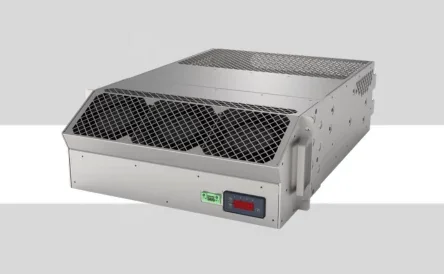
4U LHX Air-to-Liquid Heat Exchanger
The 4U LHX delivers up to 7.5 kW of cooling capacity in a space-saving 4U design, enabling higher rack densities without compromising reliability. Designed for easy integration into standard 19" cabinets, it combines efficient thermal management, intelligent monitoring, and retrofit-friendly deployment to help keep high-performance electronics operating at their best.
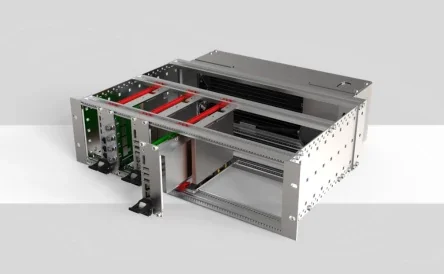
Easy Swap LFT
The Easy Swap Liquid Flow-Through (LFT) is designed to bring high-performance liquid cooling into standard 3U Eurocard environments—without compromising modularity. Built for engineers working with high-density electronics, it delivers precise thermal control where forced air reaches its limits.
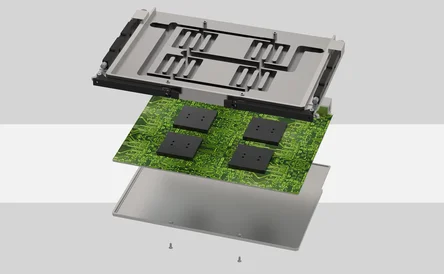
Next Level Cooling Solutions for Advanced MIL computing power
nVent SCHROFF’s Liquid Flow Through solution, built to VITA 48.4 standards, addresses the thermal challenges of high-power MIL computing. As air and conduction cooling reach their limits, this advanced system offers superior heat dissipation—handling 300W per 6U slot—ensuring optimal performance in compact, high-density environments while meeting stringent SWaP requirements.