Liquid Cooling Matters in High Performance
As electronic systems grow more powerful, heat has become one of the most defining constraints in modern design. Performance‑driven architectures, higher power densities, and compact footprints push thermal limits closer than ever before. In these environments, the challenge is no longer just how to remove heat—it is how to prevent thermal drift.
Thermal drift occurs when component temperatures and operating margins gradually shift away from their defined design limits, reducing performance consistency and long-term reliability.
When Air Cooling Reaches Its Limits
Traditional air cooling remains effective for many applications, but in high‑performance systems it increasingly struggles to keep up. Concentrated heat loads create localized hotspots that airflow alone cannot reliably manage. Space constraints limit ducting and airflow paths. Environmental variability adds further uncertainty. In these scenarios, air cooling can appear adequate in early design stages, only to reveal limitations during validation or field operation. By then, temperature margins have eroded and corrective actions are costly or disruptive.
This is thermal drift in action: a gradual loss of thermal stability caused by cooling approaches that cannot adequately manage localized heat loads. Liquid cooling becomes necessary precisely at this point—not as an upgrade for extreme cases, but as a way to restore control. For example, in high-density power electronics or processor-based systems, localized heat flux can exceed the capacity of air cooling, leading to persistent hotspots even when overall airflow rates appear sufficient.
Liquid Cooling Changes How Heat Is Managed
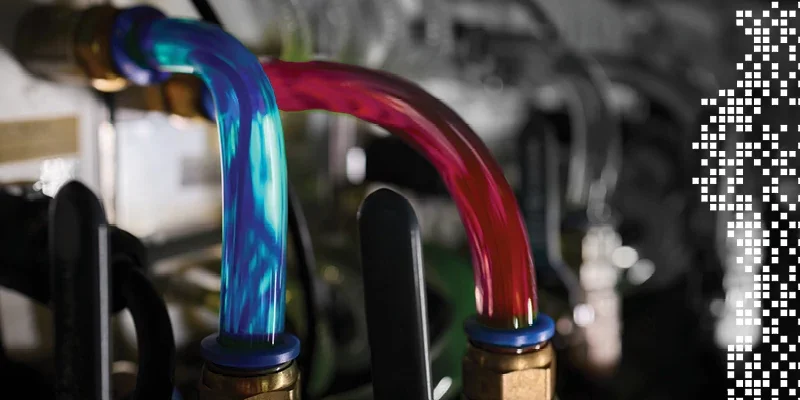
The defining advantage of liquid cooling is efficiency. Liquids transport heat far more effectively than air due to their higher thermal conductivity and heat capacity, allowing thermal energy to be removed directly at the point of generation through cold plates, microchannels, or direct-to-chip interfaces, rather than relying on enclosure‑level heat dissipation alone.
This direct approach reduces temperature gradients and minimizes hotspots. It keeps components closer to their intended operating conditions, even under peak or fluctuating loads. Over time, this stability protects reliability and predictability—two requirements that matter far more than headline performance numbers. Rather than forcing systems to compensate for heat, liquid cooling redistributes thermal loads and stabilizes the overall thermal profile of the system.
Stability, Not Peak Performance, Is the Real Advantage
One of the most overlooked benefits of liquid cooling is not higher capacity, but consistency. By maintaining uniform temperatures over time, liquid cooling prevents the subtle fluctuations that drive thermal drift. This is especially important in systems that operate continuously, are subject to tight thermal tolerances, or must meet regulatory and validation requirements, meet regulatory temperature limits, or deliver repeatable performance in test and mission‑critical environments.
With liquid cooling, thermal management becomes predictable rather than reactive. Instead of discovering problems during climate‑chamber testing or late qualification stages, teams can engineer stability into the system from the start, often reducing the need for late-stage thermal redesigns or iterative validation cycles. This shift—from cooling as a corrective measure to cooling as a stability strategy—is fundamental to managing modern electronics.
Addressing Concerns Without Adding Risk
Historically, liquid cooling introduced concerns around integration complexity, maintenance, and perceived risk. Modern implementations directly address these challenges through modular designs, defined standards, and controlled interfaces that keep liquid isolated from sensitive electronics. These include sealed loop systems, quick-disconnect couplings, and leak detection mechanisms integrated into the design.
As a result, liquid cooling no longer represents a leap into uncertainty. When engineered correctly, it becomes a controlled, documented, and supportable part of the system architecture—particularly in environments where reliability and lifecycle confidence matter most.
Liquid Cooling as Part of a Balanced Thermal Strategy
Liquid cooling does not replace air cooling everywhere. Instead, it complements it. Air cooling continues to handle baseline and distributed thermal loads, while liquid cooling targets the areas where airflow alone cannot maintain stability. Together, they form a balanced approach that adapts to system constraints without overengineering. This flexibility is essential as systems evolve and power densities continue to rise.
Keeping Systems Too Cool to Drift
Liquid cooling is critical because it enables systems to remain thermally stable—not just operational. By directly managing hotspots and holding temperatures within defined limits, it prevents the gradual loss of control that defines thermal drift. It enables higher performance without sacrificing reliability, and scalability without sacrificing confidence.
The goal is not maximum cooling capacity. The goal is thermal stability over time.
That is why, in high‑performance electronics, liquid cooling is no longer optional—it is what enables systems to maintain thermal stability and resist drift under increasing performance demands.
Key Takeaway
Liquid cooling is essential wherever air cooling can no longer guarantee thermal stability. Engineered correctly, it protects performance, reliability, and long‑term system confidence.
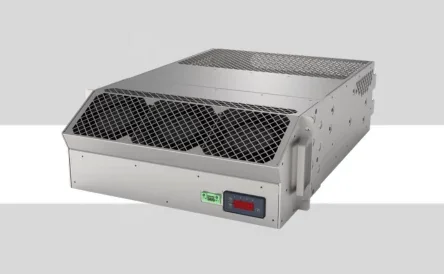
4U LHX Air-to-Liquid Heat Exchanger
The 4U LHX delivers up to 7.5 kW of cooling capacity in a space-saving 4U design, enabling higher rack densities without compromising reliability. Designed for easy integration into standard 19" cabinets, it combines efficient thermal management, intelligent monitoring, and retrofit-friendly deployment to help keep high-performance electronics operating at their best.
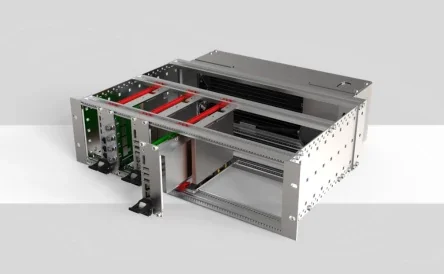
Easy Swap LFT
The Easy Swap Liquid Flow-Through (LFT) is designed to bring high-performance liquid cooling into standard 3U Eurocard environments—without compromising modularity. Built for engineers working with high-density electronics, it delivers precise thermal control where forced air reaches its limits.
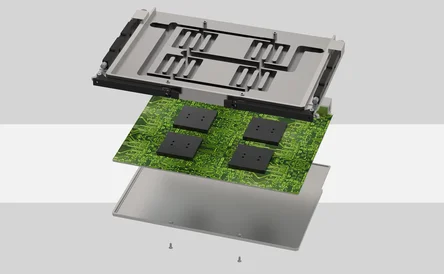
Next Level Cooling Solutions for Advanced MIL computing power
nVent SCHROFF’s Liquid Flow Through solution, built to VITA 48.4 standards, addresses the thermal challenges of high-power MIL computing. As air and conduction cooling reach their limits, this advanced system offers superior heat dissipation—handling 300W per 6U slot—ensuring optimal performance in compact, high-density environments while meeting stringent SWaP requirements.